Something Weird Is Happening to Your Website Traffic
Picture this. It’s a Tuesday afternoon. Sarah from Hamilton is craving Thai food. Two years ago, she’d open Google, type “best Thai restaurant Hamilton,” scroll past four ads, three map pins, and a suspicious blog from 2019 — then pick whichever place had more than 3.5 stars.
Today? Sarah opens ChatGPT on her phone and says: “What’s the best Thai restaurant in Hamilton with good pad thai and parking?”
ChatGPT doesn’t give her ten blue links. It gives her one answer. Maybe two. And if your restaurant isn’t in that answer — congratulations, you don’t exist.
Welcome to 2026, where your potential customers have quietly broken up with Google and started dating AI instead. And most New Zealand businesses haven’t even noticed.

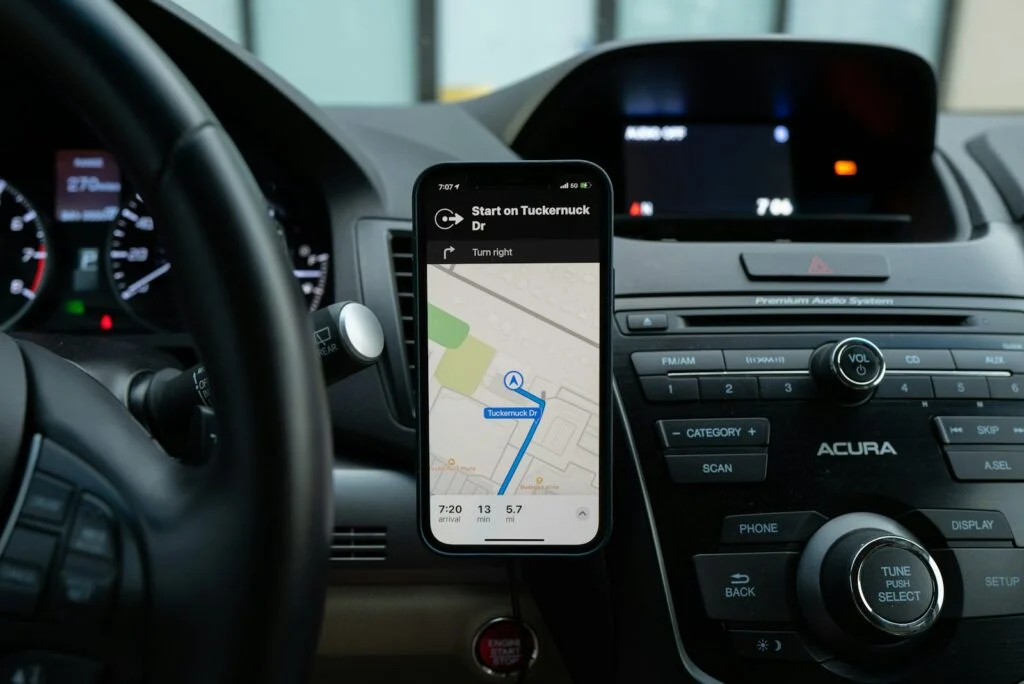
This is your customer now. No Google. No ads. Just a direct question and a direct answer. Photo: Pexels
The Numbers That Should Make You Spit Out Your Flat White
Let’s talk about what’s actually happening out there, because the stats are genuinely wild:
Over 53% of New Zealanders are now using AI tools like ChatGPT, Claude, and Gemini to search for products, services, and local businesses. Not just tech nerds. Not just Gen Z kids posting on TikTok. Your mum. Your accountant. That builder who still has a Nokia for calls but secretly uses ChatGPT for quotes.
ChatGPT alone has over 800 million users worldwide. That’s not a rounding error — that’s more people than the entire population of Europe. And they’re not just writing poems and asking it to explain cryptocurrency. They’re asking it where to get their roof fixed, which accountant to use, and who builds the best websites in Tauranga (hi, that’s us).
Here’s the kicker: AI search grew over 800% year-on-year. Not 8%. Not 80%. Eight hundred percent. If your Google Analytics showed that kind of growth in any channel, you’d take the whole team out for steak. But because this traffic doesn’t show up in your analytics dashboard — because it’s happening inside the AI — most businesses are completely blind to it.
Wait, So Google Is Dead?
No. Google isn’t dead. But it’s got a serious limp.
Think of it like this: Google used to be the only pub in town. Everyone went there. Now there are five new bars that opened across the road — ChatGPT, Claude, Gemini, Perplexity, Copilot — and the crowd has split. Google still gets plenty of foot traffic, but a massive chunk of your potential customers are drinking elsewhere.
And here’s what makes it even more interesting: when AI recommends a business, the conversion rate is insanely high. Because there’s no scrolling, no comparing, no “let me check one more review.” The AI said it. The human trusts it. Done.
That’s either the best news or the worst news you’ve heard all week, depending on whether AI knows you exist.

More and more Kiwis are skipping Google entirely and going straight to AI for answers. Photo: Pexels
What the Heck Is AI Optimisation (And Why Should You Care)?
You’ve heard of SEO — Search Engine Optimisation. The art of getting Google to notice you. You might even be paying someone for it (if you’re lucky, someone who actually knows what they’re doing).
AI Optimisation — also called GEO (Generative Engine Optimisation) — is the same concept, but for AI. It’s about making sure that when someone asks ChatGPT, Claude, or Gemini a question related to your business, you’re the one they recommend.
Here’s how it works in plain English:
AI models like ChatGPT don’t just pull answers out of thin air (despite what it feels like sometimes). They learn from the internet — from websites, articles, reviews, data, social mentions, and structured information. The businesses that show up in AI answers are the ones that have done the work to make their information clear, authoritative, and easy for AI to understand.
That means your website needs to do more than just look pretty. It needs to speak AI. Structured data. Clean entity signals. Authority content. Technical foundations that make AI models go: “Yeah, this lot clearly knows what they’re talking about — recommend them.”
Sound complicated? It’s not — if you know what you’re doing. That’s literally what we built our AI Visibility System for.
The “But I Already Do SEO” Problem
Here’s where it gets spicy. A lot of business owners think: “I’m already paying for SEO, surely that covers AI too?”
Mate, I wish. But no.
Traditional SEO and AI Optimisation overlap, sure — like how rugby and league are both played with an oval ball. But the rules are different, the scoring is different, and the strategy that wins in one can get you absolutely smoked in the other.
SEO is about ranking on a page of results. You’re competing for position 1 through 10. Even position 5 still gets clicks.
AI Optimisation is about being THE answer. There is no position 2. The AI either recommends you or it doesn’t. It’s winner-take-most, and the losers get absolutely nothing — not even a participation ribbon.
The good news? Strong SEO gives you a massive head start on AI Optimisation. If your website already has solid technical foundations, quality content, and genuine authority, you’re halfway there. The other half is what separates the businesses AI recommends from the ones it ignores.
That’s why the smartest move is working with someone who does both — traditional SEO AND AI Optimisation — so they’re reinforcing each other instead of working in silos.
Who’s Already Doing This in New Zealand?
Almost nobody. And that’s the opportunity.
We did the research. As of right now, there are zero dedicated AI Optimisation agencies in the Bay of Plenty. A handful in Auckland are starting to offer it, but most are running their own websites on Wix (which tells you everything you need to know about how seriously they take web performance).
Nationally, GEO is still in its infancy in New Zealand. The agencies that are talking about it are mostly just adding a paragraph to their SEO page and calling it a day. Nobody is doing the deep technical work — the entity optimisation, the structured data architecture, the AI-specific content strategy, the ongoing monitoring of how AI models actually perceive and recommend brands.
Globally, the big players are charging $5,000-$15,000 a month for this. In the US, early movers have already locked in enterprise clients. In NZ? The starting gun just went off and most people are still tying their shoes.
If you’re a business in Tauranga, Hamilton, Rotorua, or anywhere in the Bay of Plenty and Waikato — you have a genuine first-mover advantage right now. Six months from now? Not so much.
What Happens If You Do Nothing
Let’s play this out. You ignore AI Optimisation. You keep doing what you’re doing. Here’s what happens over the next 12-18 months:
Your Google traffic slowly declines as more people use AI for search. Your competitors — the ones who moved early — start getting recommended by ChatGPT and Claude. You notice fewer enquiries but can’t figure out why, because your Google rankings haven’t changed. Your SEO reports still look fine, but the phone rings less.
Meanwhile, your competitor down the road who got their AI optimisation sorted six months ago is absolutely drowning in leads, because every time someone in the Bay of Plenty asks ChatGPT for a recommendation, their name comes up. Not yours. Theirs.
It’s not dramatic. It’s not sudden. It’s just… a slow fade. Like being ghosted, but by the entire internet.
What You Can Actually Do About It (Starting Today)
Alright, enough doom and gloom. Here’s the practical stuff:
Step 1: Find out where you stand. Ask ChatGPT, Claude, and Gemini questions that your customers would ask. Are you being recommended? Are your competitors? The answers might surprise you (or horrify you — either way, good to know).
Step 1b: Get listed where AI actually looks. AI tools recommend businesses they can find in trusted, machine-readable sources. Make sure yours is one of them. We walk through exactly how to do it in how to list a New Zealand business for local SEO and AI search.
Step 2: Get your technical house in order. Your website needs to be fast, mobile-friendly, and properly structured. AI models favour websites that are technically sound. If your site loads like it’s on dial-up, AI isn’t going to recommend you for anything.
Step 3: Build authority content. Stop writing 300-word blog posts that say nothing. Create genuinely useful, detailed content that demonstrates your expertise. AI recommends experts, not amateurs with a WordPress login.
Step 4: Get proper AI Optimisation. Structured data, entity signals, citation building, AI-specific content architecture, ongoing monitoring and adaptation. This is where it gets technical, and this is where working with specialists makes the difference between guessing and knowing.
Why We’re Weirdly Excited About This
Look, we’ve been doing SEO at Bay Web Co for years. We’ve watched every Google algorithm update, every trend, every “SEO is dead” hot take on Twitter. And through all of it, the core principle has never changed: help your customers find you when they’re looking.
AI Optimisation isn’t replacing SEO. It’s the next evolution. And frankly, it’s the most exciting thing to happen in digital marketing since… well, since Google itself.
We’ve built a proper AI Visibility System — not a repackaged SEO service with “AI” slapped on the label. It’s a structured, five-step process that gets your business recommended by AI, and keeps it there as the models evolve.
And because we’re not trying to become another faceless Auckland agency, we’re keeping our client list deliberately small. We’d rather do incredible work for a handful of businesses than mediocre work for dozens.
If that sounds like what you need — or if you just want to find out whether ChatGPT even knows your business exists — our $599 AI Visibility Audit is the place to start. No lock-in contracts, no corporate waffle, no Wix websites. Just results.
Your customers are already asking AI for answers. The only question is: are you the answer they get?
Bay Web Co is a Tauranga-based web development and digital marketing agency specialising in SEO and AI Optimisation for New Zealand businesses. We build fast websites and make sure the right people find them — whether they’re searching on Google or asking AI.